Watercolor Human Organs Clipart for Embroidery
As a professional embroidery designer who has digitized and stitched out countless anatomical and botanical themes, I approach the Watercolor Human Organs Clipart, Anatomy collection with a specific lens. When evaluating illustrations for needlework, we aren't just looking at pretty pictures; we are analyzing how digital art translates into physical thread. This particular set of anatomy illustrations strikes a unique balance between clinical accuracy and artistic softness, making it a compelling candidate for niche handmade products. However, moving from a screen to a hoop requires careful consideration of stitch density, fabric choice, and end-use application.
First Impressions: Mood and Visual Translation
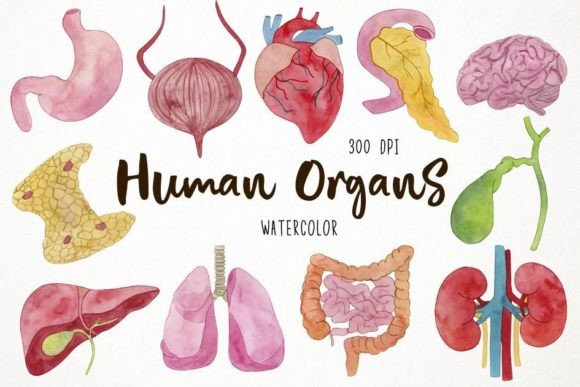
My immediate reaction to this Watercolor Human Organs Clipart, Anatomy set is that it avoids the sterile, textbook aesthetic often associated with medical imagery. The watercolor style introduces organic edges and color blending that mimics the natural flow of thread. For an embroidery project, this is advantageous. Sharp, high-contrast vector lines can sometimes look harsh when stitched, but the softer gradients in these illustrations allow for more forgiving digitizing. The mood is educational yet whimsical, suggesting applications in science teacher gifts, nursing student apparel, or boutique nursery decor rather than strict medical uniforms.
The visual personality here leans toward vintage scientific illustration meets modern artistry. This distinction matters for customer trust. If you are an Etsy seller or small shop owner, your buyers are looking for something that feels curated and intentional. These assets possess enough character to stand alone as a focal point on a tote bag design or sweatshirt embroidery without needing excessive text or embellishment to fill space.
Real-World Application: Stitching a Custom Tote Bag
To truly evaluate this collection, I mentally walked through a recent client request for a custom embroidered tote bag intended as a gift for a biology graduate student. The goal was to create a personalized gift that felt sophisticated, not cartoonish. Using the heart and lung illustrations from this set, I considered how the watercolor effect would render on unbleached canvas.
In this scenario, the Watercolor Human Organs Clipart, Anatomy files serve as excellent reference material for creating an applique design or a complex fill stitch composition. Because tote bags endure heavy use, I opted to interpret the watercolor washes as textured fill stitches rather than attempting to replicate every brushstroke with satin stitch, which could lead to puckering on canvas. The result was a finished product that retained the artistic integrity of the original illustration while being durable enough for daily carry. This real-life test confirms that these illustrations work best when treated as artistic interpretations rather than literal tracing exercises.
Best Use Cases for Creative Entrepreneurs
For makers and commercial embroidery businesses, versatility is key. Based on the line weight and detail level of these illustrations, I see strong potential in several specific categories:
- Nursery and Baby Embroidery: The soft color palette makes these organs appear friendly rather than graphic. They are ideal for educational baby blankets or wall hangings where parents want anatomical correctness without gore.
- Academic and Professional Apparel: Sweatshirt embroidery featuring a stylized brain or kidney appeals to grad students, nurses, and doctors who want subtle branding. The watercolor aesthetic elevates the garment above standard university bookstore merchandise.
- Patches and Caps: While detailed, the central shapes are distinct enough to work as an embroidered patch. However, cap embroidery requires simplification due to the curved surface and limited stitch area.
- Digital Product Previews: For sellers of digital embroidery files, these illustrations provide beautiful printable mockup backgrounds. They help customers visualize the final aesthetic before purchasing, increasing conversion rates for craft business listings.
Critical Considerations: Where to Exercise Caution
Despite their beauty, watercolor-style anatomy presents challenges that every machine embroidery design enthusiast must respect. The primary concern is detail loss at smaller sizes. Organs like the kidneys or intestines have intricate internal structures that may turn into mud if scaled down for a left-chest logo or baby onesie. Always check the minimum recommended size before digitizing or stitching.
Fabric texture plays a massive role in the success of this design type. On highly textured fabrics like terry cloth or fleece, the delicate watercolor shading can get lost. You may need to increase stitch density or add a topping stabilizer to ensure the thread colors pop against the fabric grain. Conversely, on thin or stretchy fabrics like jersey knit, the density required to replicate watercolor effects can cause distortion. In these cases, using the Watercolor Human Organs Clipart, Anatomy as a guide for a lighter, outline-heavy running stitch version might be safer than a full-fill reproduction.
Dark fabrics also present a hurdle. Watercolor relies on transparency and light layering. Stitching these designs on black or navy garments requires either a white underlay base (which adds significant density) or accepting that the colors will appear muted. For holiday embroidery or winter apparel on dark goods, consider testing a high-contrast variation first.
Impact on Product Value and Brand Perception
Using high-quality illustrations like Watercolor Human Organs Clipart, Anatomy directly influences perceived value. In the saturated market of handmade products, generic clipart is easily recognized and often devalued by buyers. These illustrations signal professionalism and artistic intent. When a customer sees a well-executed anatomical design on a tea towel or pillow cover, they associate the product with higher quality craftsmanship.
Furthermore, consistency in design assets builds brand recognition. If you are building a shop focused on science-inspired gifts, maintaining this specific watercolor aesthetic across different products creates a cohesive collection. Buyers are more likely to return for matching items or recommend your shop to others because the visual language is distinct and reliable. This cohesion transforms individual sales into a recognizable brand identity.
Practical Designer Notes for Success
Before you load this embroidery file into your machine or list a finished product for sale, run through this practical checklist derived from years of production experience:
- Test on Scrap Fabric First: Never assume screen colors equal thread colors. Stitch a sample on the exact fabric you intend to use for the final project to evaluate coverage and tension.
- Verify Licensing: Confirm whether your purchase includes commercial rights for both physical products and digital embroidery files. Licensing terms vary, and protecting your business starts with compliance.
- Analyze Stitch Density: If digitizing these illustrations yourself, avoid over-digitizing. Watercolor implies lightness; excessive satin stitch density will make the fabric stiff and bulletproof. Use tatami or fill stitches with variable spacing to mimic paint washes.
- Check Thread Color Contrast: Review your thread palette against the fabric background. What looks vibrant on a white digital canvas may disappear on cream linen. Adjust saturation or add outline definition if necessary.
- Evaluate Small Details: Inspect corners and tiny lettering. If the anatomy includes labels, ensure they remain legible at your chosen hoop size. If not, remove them and rely on the shape alone.
- Mockup Testing: Create black and white mockups alongside color versions. This helps identify whether the design relies too heavily on color contrast or if the values hold up independently, which is crucial for accessibility and print clarity.
Ultimately, Watercolor Human Organs Clipart, Anatomy offers a rich foundation for creative embroidery projects when approached with technical mindfulness. By respecting the translation process from pixel to stitch, you can create handmade products that are as durable as they are beautiful, satisfying both the maker’s standards and the customer’s expectations.